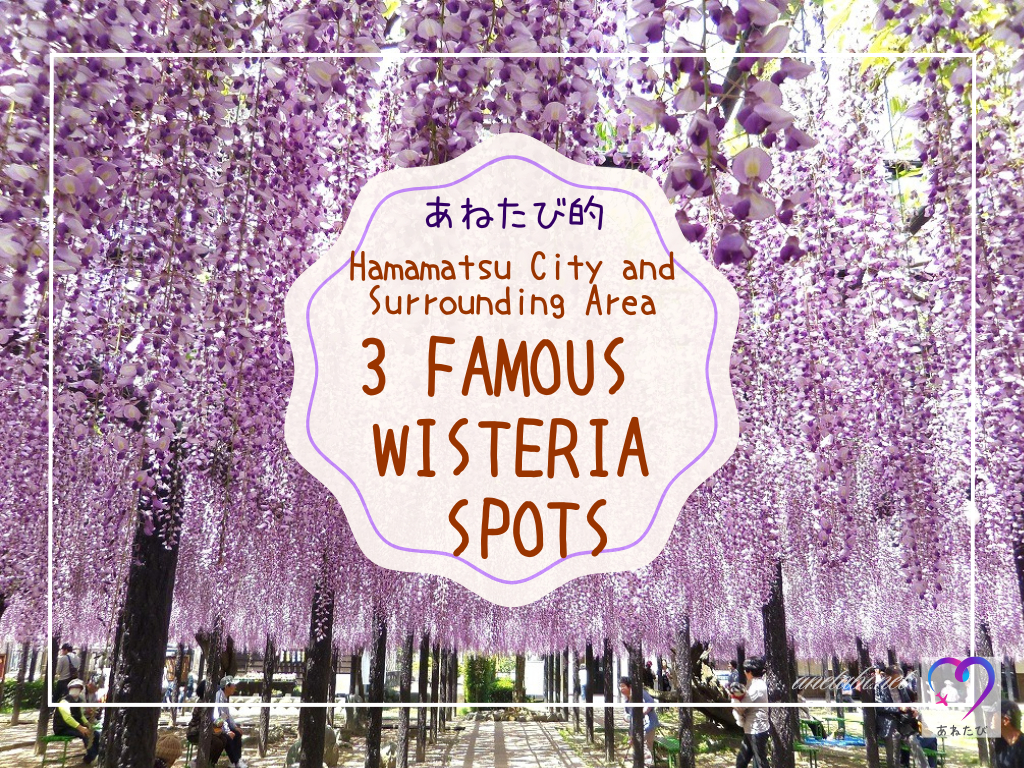
When the cherry blossoms fade, the season of wisteria begins. In Hamamatsu City and Iwata City, located about 30 minutes east of Nagoya by Shinkansen Hikari, you can enjoy beautiful wisteria displays at three distinct locations.
These three spots are Hamamatsu Flower Park, Hamanako Garden Park, and Gyoko-ji Temple. Furthermore, two of these locations host annual the illuminated wisteria. This article will introduce the best viewing times, highlights, and illuminated scenes at these three sites, complete with images.
Where are the best places to see wisteria flowers in and around Hamamatsu City?
There are two wisteria flower spots in Hamamatsu City and one in Iwata City.
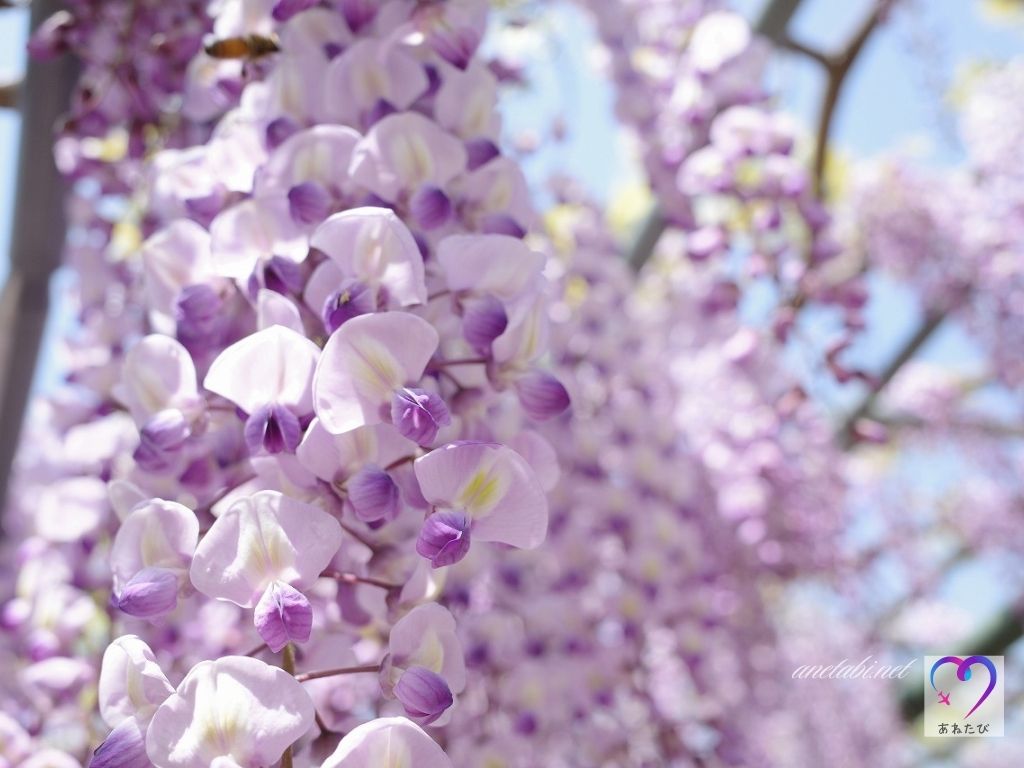
The main wisteria viewing spots in and around Hamamatsu City are “Hamamatsu Flower Park” and “Hamanako Garden Park” in Hamamatsu City, and “Gyoko-ji Temple(行興寺)” in Iwata City.
Gyoko-ji Temple is a temple associated with Yuya, a woman from the late Heian period. The wisteria blooming on its grounds is called “Yuya no Nagafuji” (Yuya’s Long Wisteria) and is designated as a National Natural Monument. Additionally, the adjacent “Toyoda Kumano Memorial Park” has benches, making it a popular spot where many people visit every year to leisurely enjoy viewing the wisteria blossoms.
In Hamamatsu City, the wisteria flowers at Hamamatsu Flower Park and Hamanako Garden Park are particularly famous.
Hamamatsu Flower Park boasts four wisteria trellises in total: the “Long Wisteria Trellis,” the area around the Japanese Garden, and the “Rainbow Wisteria Tunnel.” Meanwhile, at Hamanako Garden Park, the wisteria entwined around the bridges spanning the pond delight visitors.
春~初夏の花々を楽しめる「浜名湖花フェスタ2025」の楽しみ方3選(※Japanese only)
Hamamatsu Flower Park official website(external site)(※Japanese only)
Hamanako Garden Park official website(external site)
Official blog of the Ikeda City Planning Council (Gyokyoji Temple)(external site)(※Japanese only)
How much is admission?
Regarding admission fees, both Hamanako Garden Park and Gyokoji Temple offer free admission. However, Hamamatsu Flower Park charges an entrance fee.
The admission fee for Hamamatsu Flower Park varies depending on the season. Therefore, it’s highly recommended to check their official website before your visit to confirm the current entry fee.
Hamamatsu Flower Park-Ticket purchase site(external site)
Best Time to See Wisteria
The best time to see wisteria, or when it reaches its peak bloom, can change depending on various factors such as weather conditions and the specific variety of wisteria.
In recent years, the long wisteria around Hamamatsu City has tended to reach its peak just before Golden Week (usually around April 29th).This means it’s unlikely that the long wisteria will reach its peak at the same time as the later-blooming white wisteria.
It’s important to remember that the exact timing of blooms can vary each year due to climatic conditions. Therefore, please use this information as a general guide, and it’s always a good idea to check the latest blooming status before you visit. Wisteria blooms generally from mid-April to early May.
The illuminated wisteria at nighttime: Where and When?
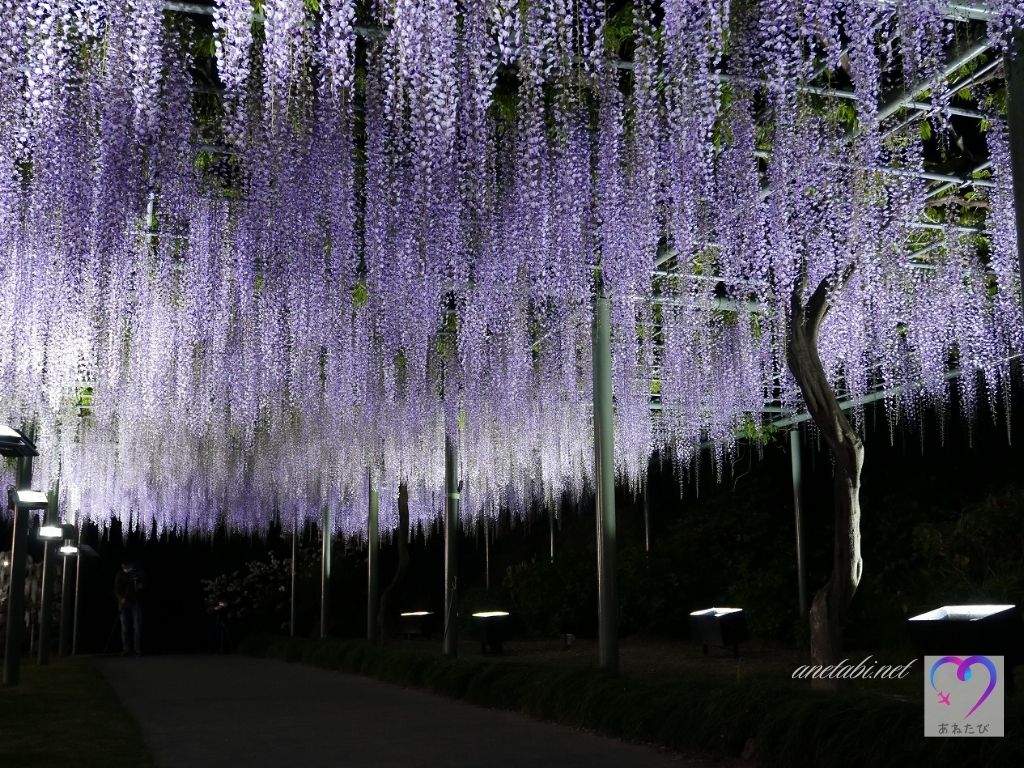
Among the three wisteria spots mentioned, the illuminated wisteria events are held at Hamamatsu Flower Park and Gyokoji Temple.
At Hamamatsu Flower Park, the light-up period typically runs from late April through the Golden Week holidays. The illuminated usually starts at 6:00 PM and continues until the park closes.
At Gyokoji Temple, the wisteria light-up is held on weekends in late April and throughout the Golden Week holidays, from sunset until 9:00 PM.
These light-ups offer a magical viewing experience, transforming the wisteria into a different spectacle after sunset.
When I went to see the illuminated wisteria at Gyokoji Temple, I was wearing a long-sleeved T-shirt with a thin cardigan over it. It was so cold that I ended up going home after just a quick look.
The temperature can really change a lot between day and night, so it’s good to be prepared. (This is just one Japanese person’s experience/feeling.)
※Please note that as of February 2, 2026, the exact dates and times for the wisteria light-ups in 2026 are yet to be announced. It’s always best to check the official websites closer to the season for the most current information.
Even if the daytime is cloudy, it hardly matters once darkness falls. The evening light-up creates a completely different, almost magical atmosphere. It’s a truly unforgettable experience, perfect for creating lasting memories of your visit to Japan. So, please do consider adding it to your itinerary!
Introducing the highlights of wisteria flower viewing spots
Here’s a brief introduction to the highlights of three wisteria viewing spots.
Wisteria Spot at Hamanako Garden Park
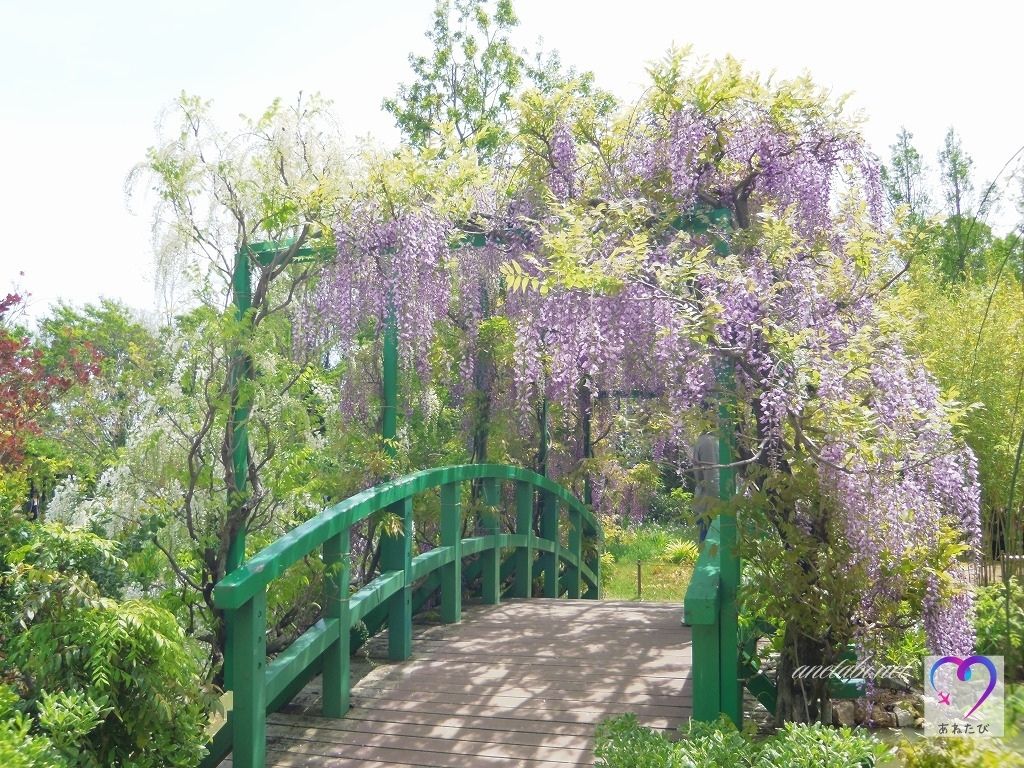
The wisteria spot at Hamanako Garden Park is located at the very back of the park, within the “Museum of Flowers.”
This area was originally created during the 2004 Lake Hamana Flower Expo, inspired by the garden built by Impressionist painter Claude Monet in Giverny, France. For five years, it was known as “Monet’s Garden.” Since April 2009, it has been rebranded as the “Museum of Flowers” and continues to delight many visitors with its two distinct areas: the “Flower Garden” with its magnificent rose arches and the “Water Garden” where water lilies bloom.
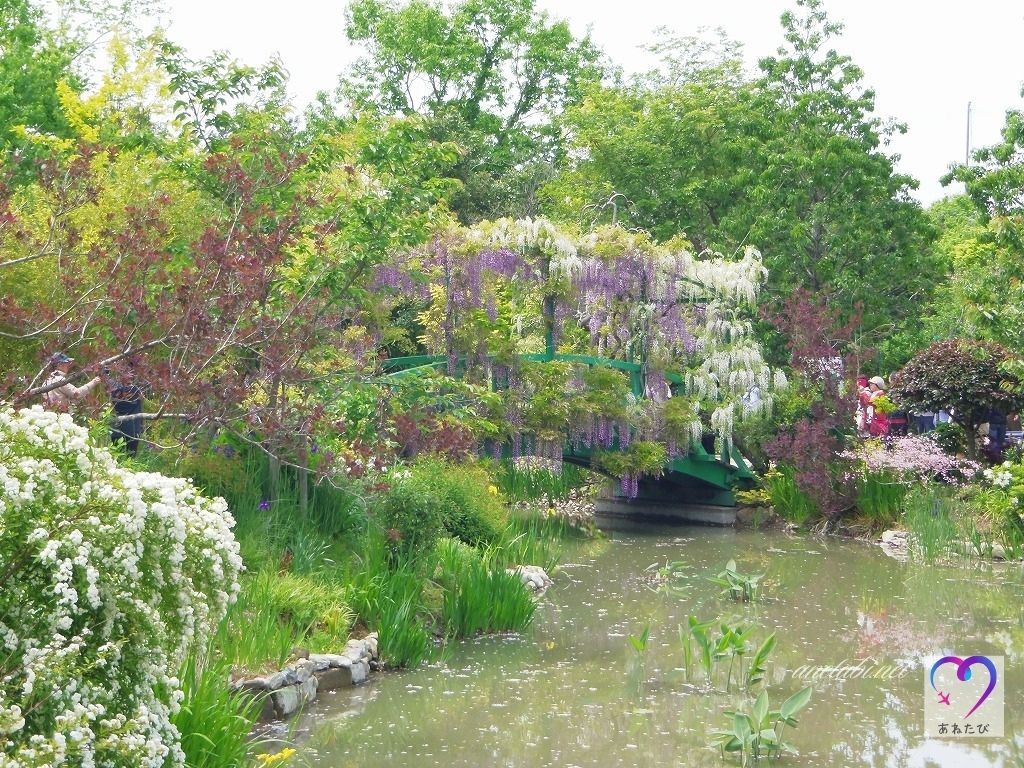
The wisteria flowers can be found on and around the bridge spanning the pond in the Water Garden. They combine with the surrounding scenery to create a distinctly Japanese garden atmosphere. You can stroll around the entire pond, whether you choose to cross the bridge or not.
The best time to see the flowers is from late April to early May. While there is no nighttime illumination, why not take a leisurely daytime stroll around the pond area and enjoy the peaceful ambiance?
Near the Museum of Flowers, you might find food trucks setting up shop on weekends. I bought a wisteria soft-serve ice cream here, but unfortunately, due to the heat, it melted so quickly that I gave up on taking a picture of it..
Wisteria at Hamamatsu Flower Park
I’ve put together a slideshow from 12 selected images I’ve taken of the wisteria at Hamamatsu Flower Park. You can enjoy wisteria scenery like this within the park.
Within the park, you can enjoy wisteria scenery like the one shown.
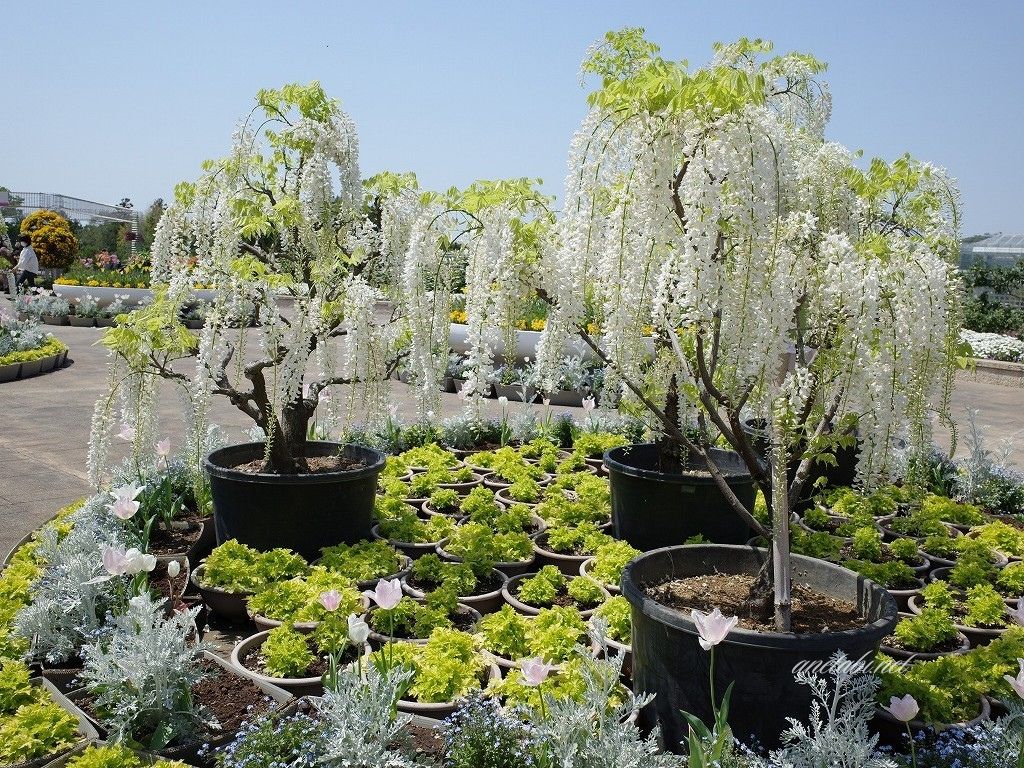
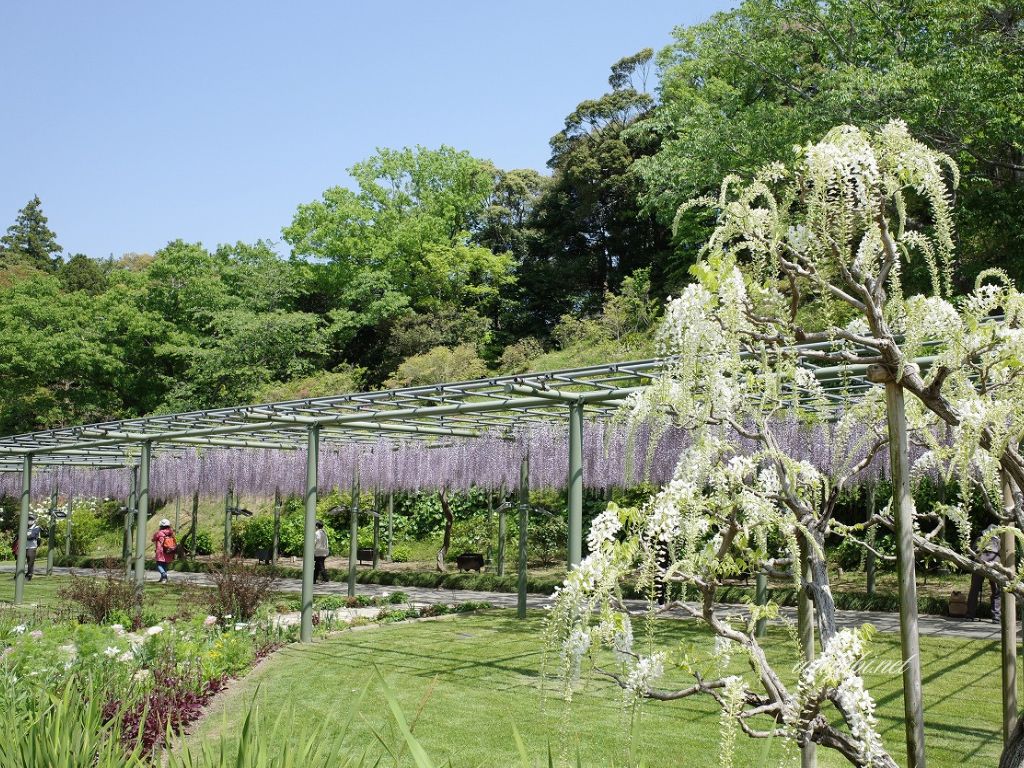
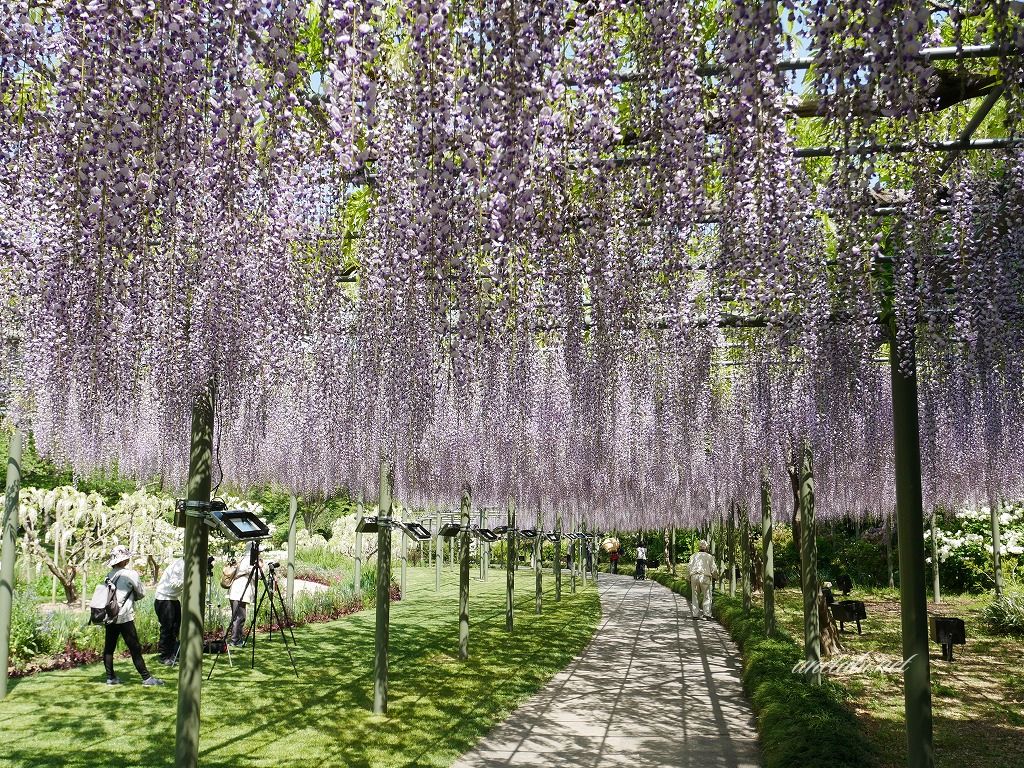
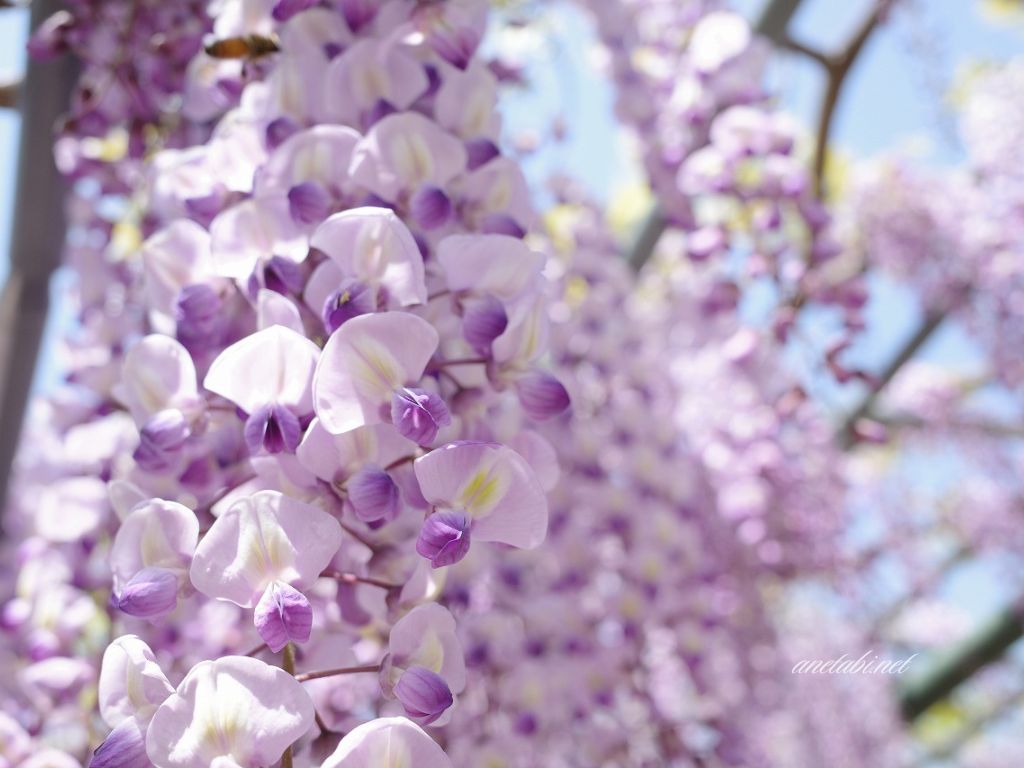
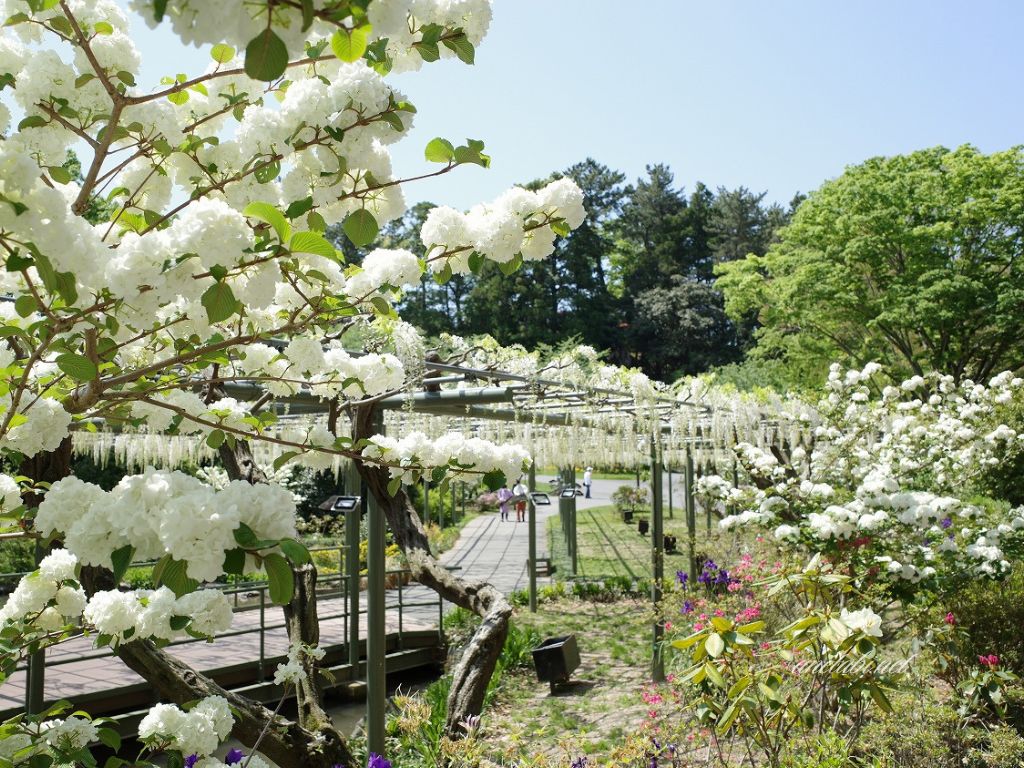
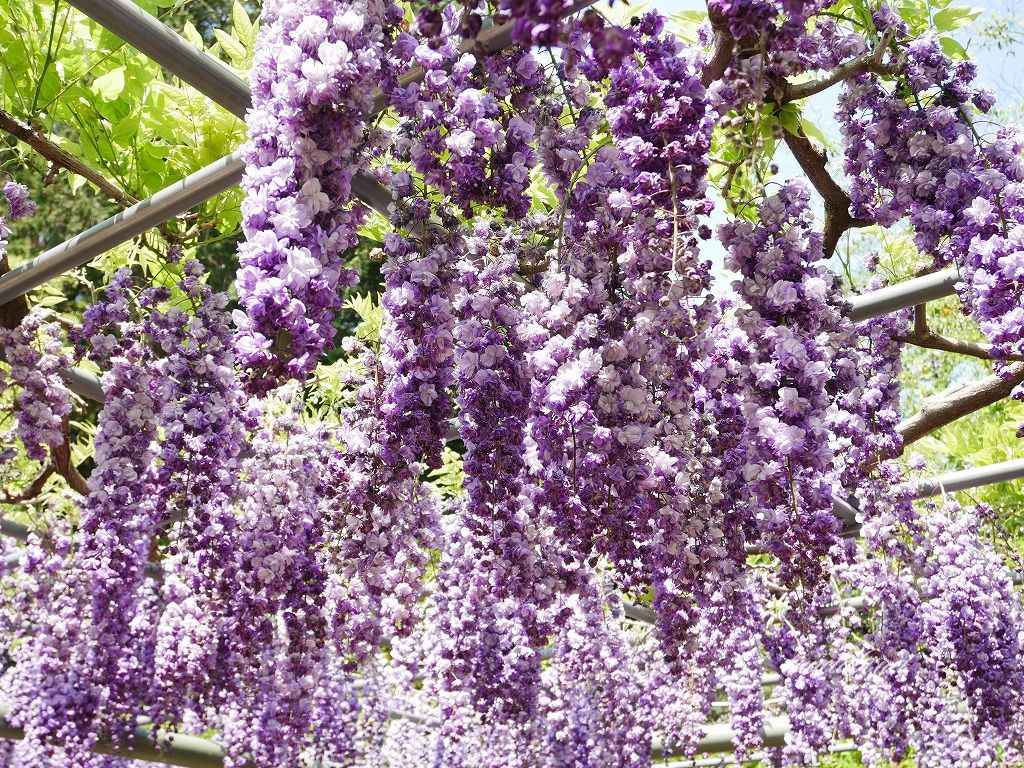
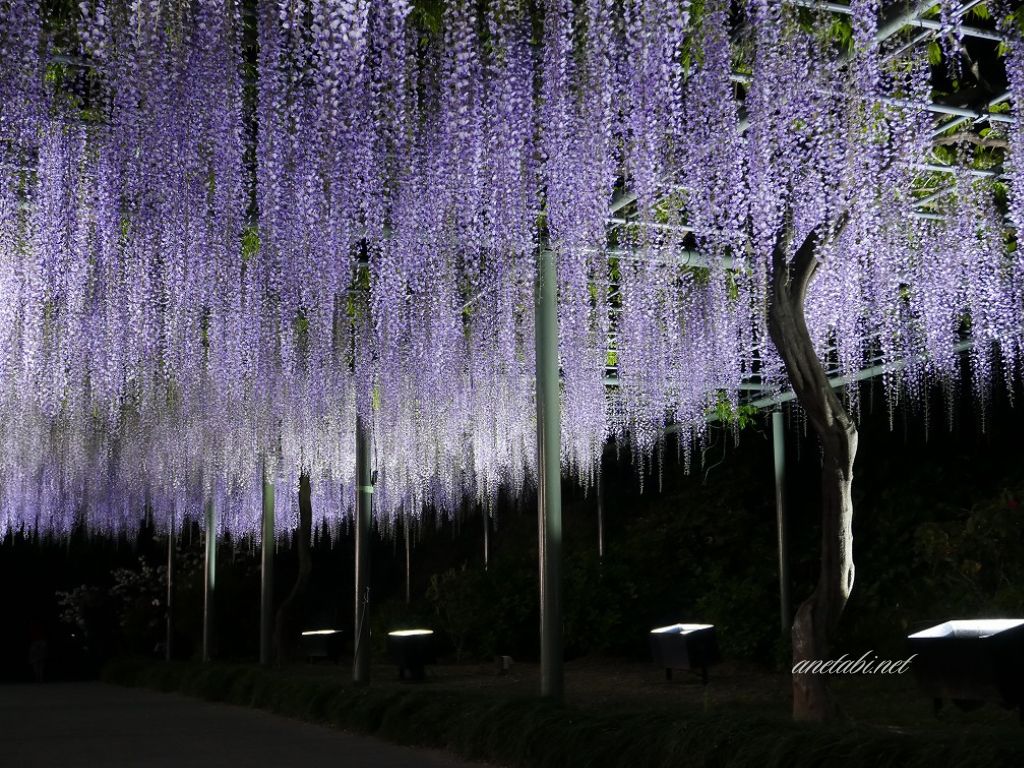
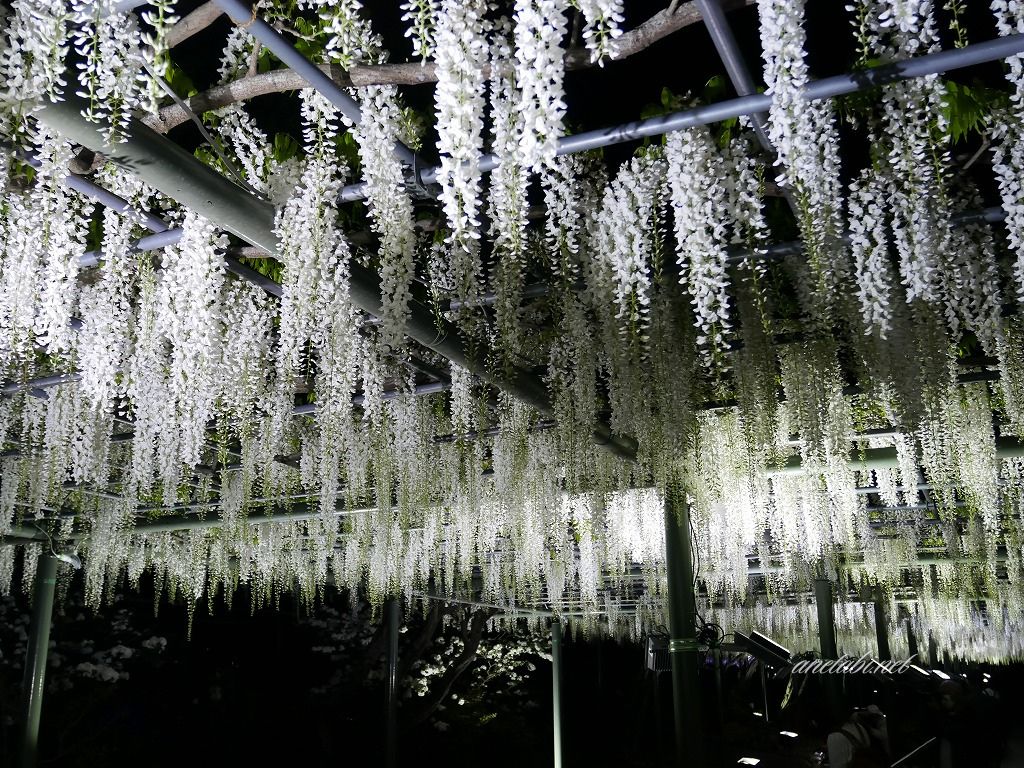
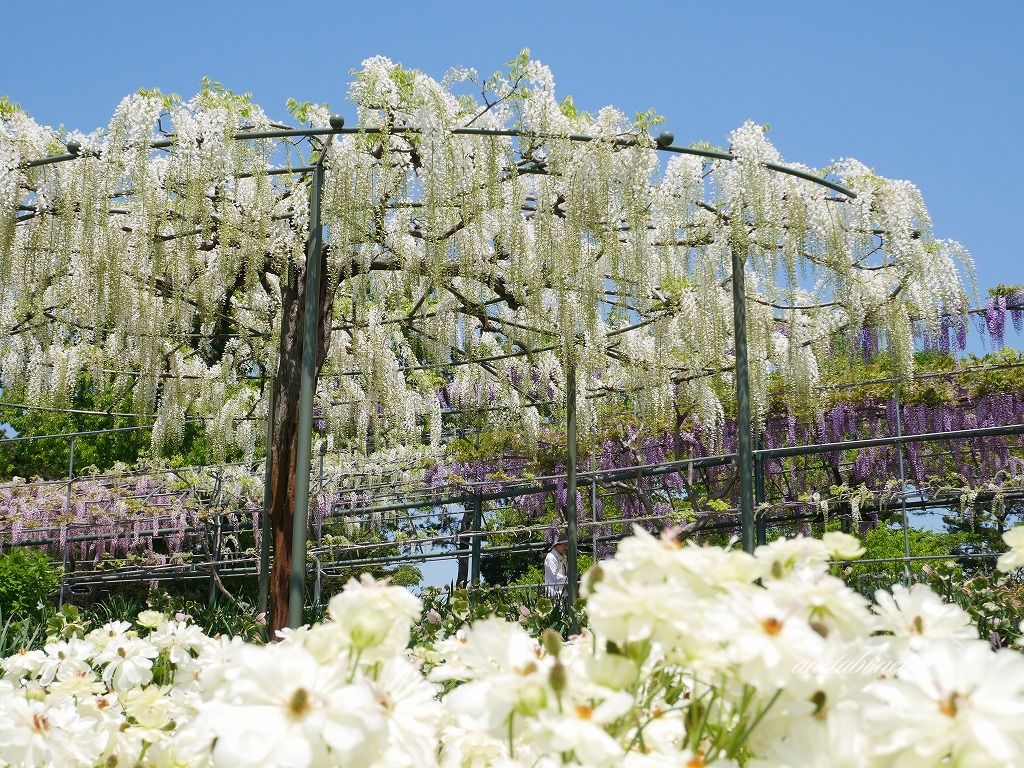
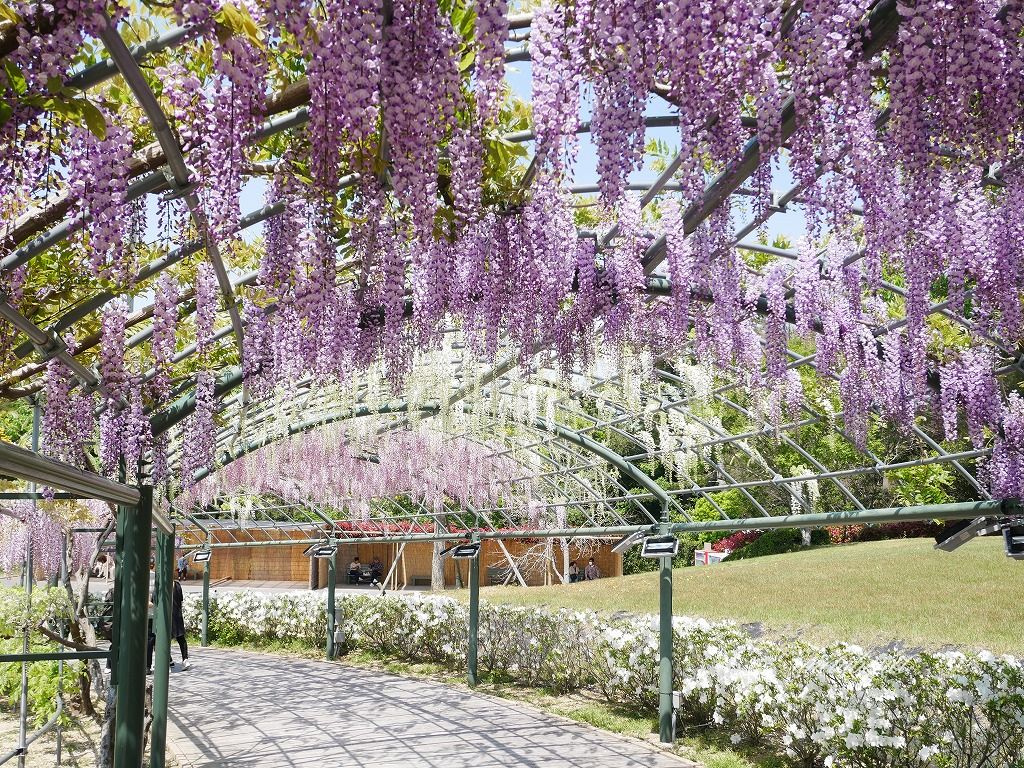
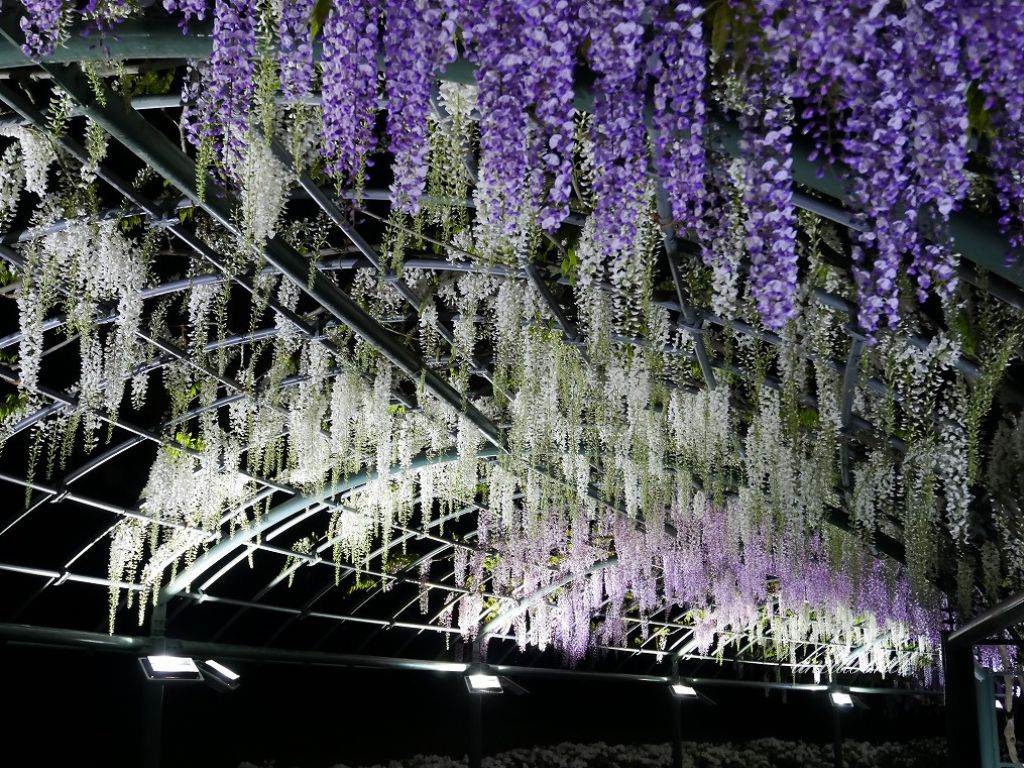
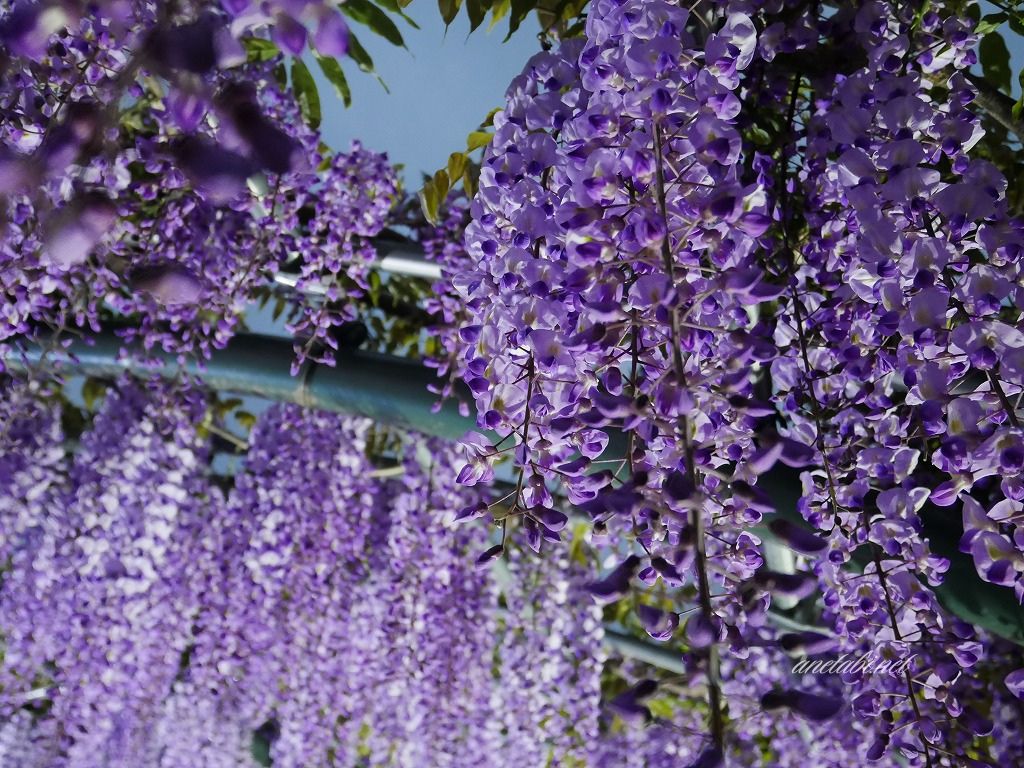
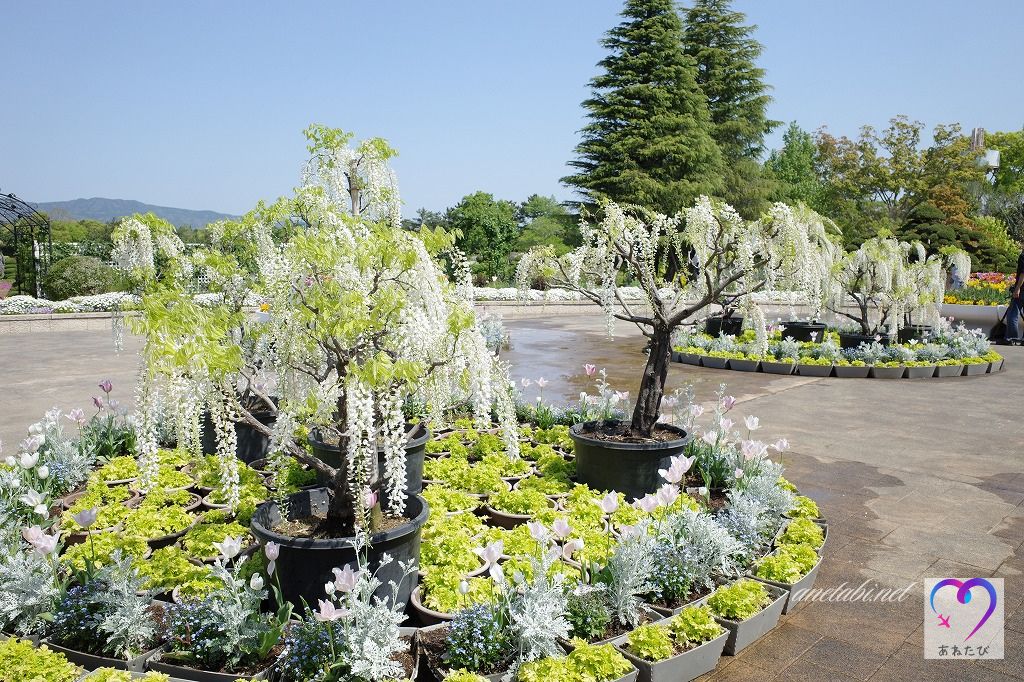
The wisteria spots at Hamamatsu Flower Park include the “Rainbow Wisteria Tunnel” on the way to the main greenhouse, the 80-meter-long “Long Wisteria Trellis,” and the area around the “Japanese Garden” beyond it.
Furthermore, in the Welcome Garden, located right after entering through the main gate, large potted wisteria flowers greet visitors. You might just feel your spirits lift the moment you step into the park!
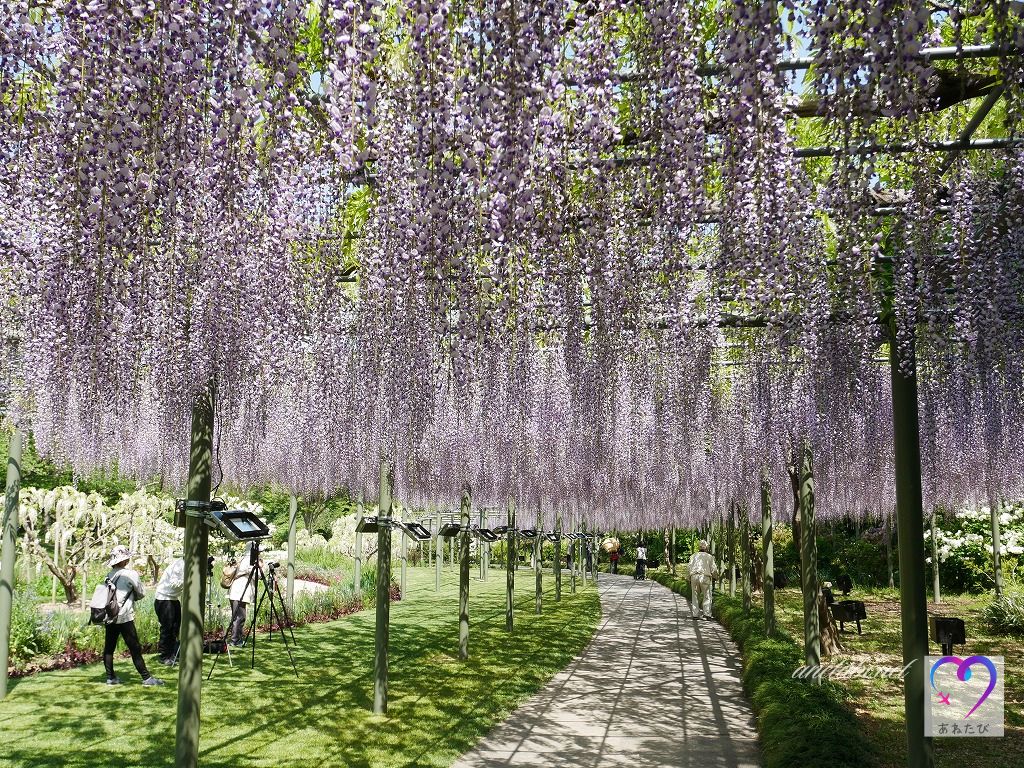
The park features several wisteria trellises. In addition to the “Rainbow Wisteria Tunnel” and “Long Wisteria Trellis” mentioned earlier, there are also “White Wisteria” and “Yaekokuryu” (double-flowered wisteria trellises around the Japanese garden.
The long wisteria trellis showcases the Noda-nagafuji, also known as the nine-shaku wisteria.
By Day: During the day, it presents an elegant and graceful appearance.
By Night: When lit up at night, its awe-inspiring beauty captivates visitors.
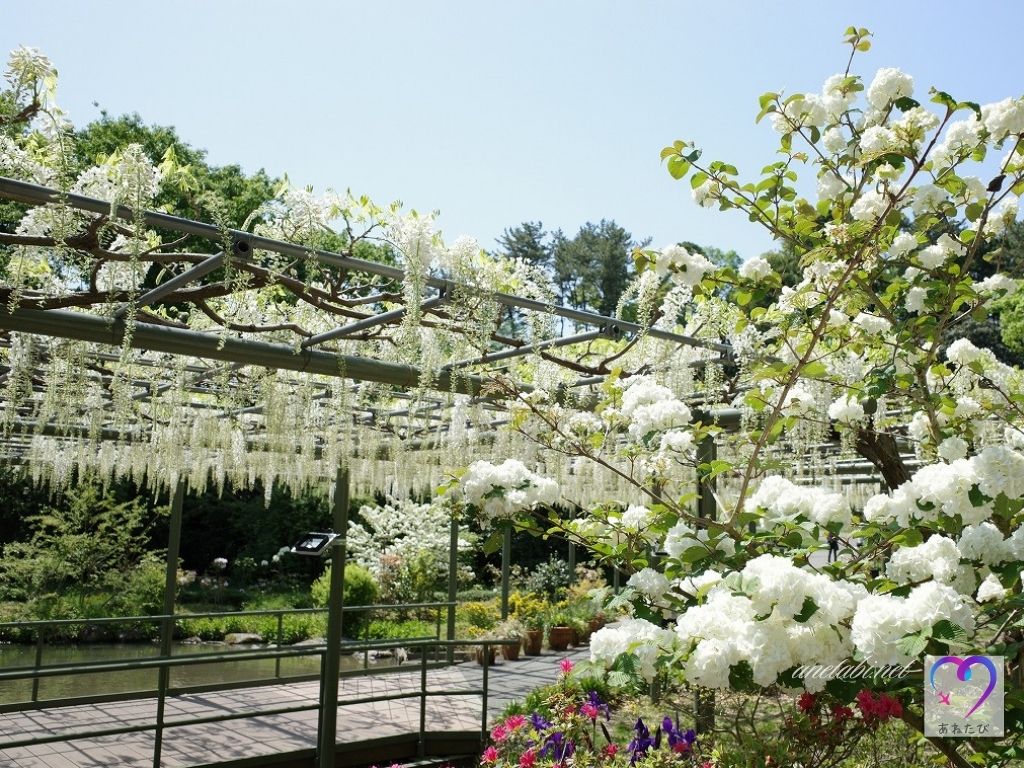
Beyond the long wisteria trellis, you’ll find the white wisteria and the Yaekuryu (double-flowered black dragon wisteria).
The white wisteria trellises are situated along the pond, with some even extending over a bridge that crosses it.
When illuminated in the evening, many visitors attempt to capture photographs of the wisteria reflected in the pond.
I’ve tried several times myself, but since my mirrorless camera doesn’t have a telephoto lens, it was challenging to get the shots I envisioned.
The Yaekuryu wisteria flowers, at first glance, resemble adorable bunches of grapes.(You can see this flower in the 6th image of the slideshow above.)
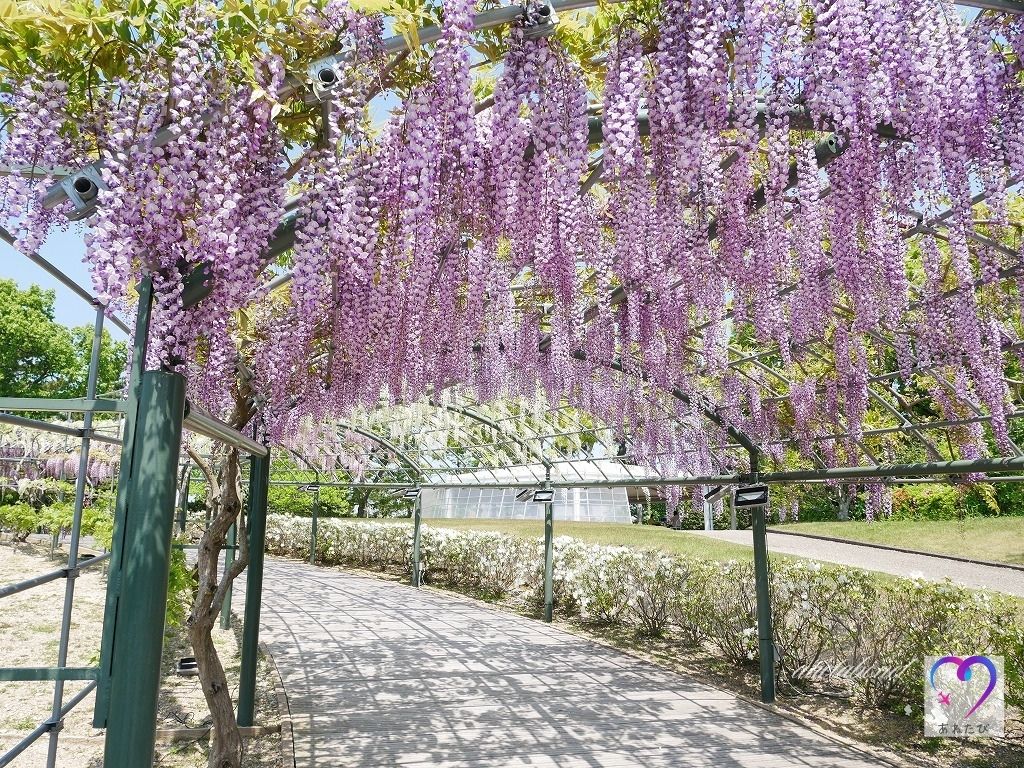
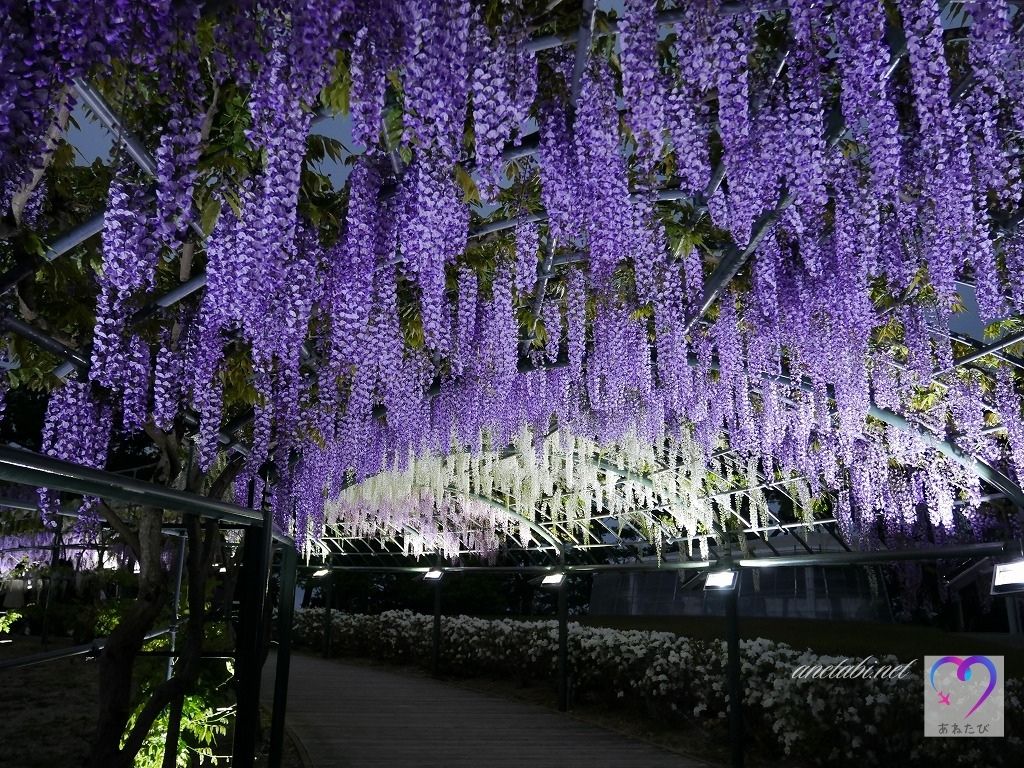
The “Rainbow Wisteria Tunnel” is located at the edge of a slope leading to the main greenhouse. It gently arcs, with both ends lower and the center rising higher. The wisteria vines extend from both sides, creeping overhead, creating the distinct impression of a tunnel of wisteria flowers.
The rainbow wisteria tunnel features several types of wisteria to create a vibrant color gradation.
For the overhead section: Three varieties are planted here: Honbeni-fuji (deep pink wisteria), Shiro-fuji (white wisteria), and Ebi-cha-fuji (shrimp brown wisteria).For the lower side sections: Yaekuryu (double-flowered wisteria) flowers are planted.
This combination of wisteria purple, white, and pale wisteria shades truly creates a rainbow tunnel…!
Wisteria Spot at Gyoko-ji Temple(行興寺)(Yuya no Nagafuji)
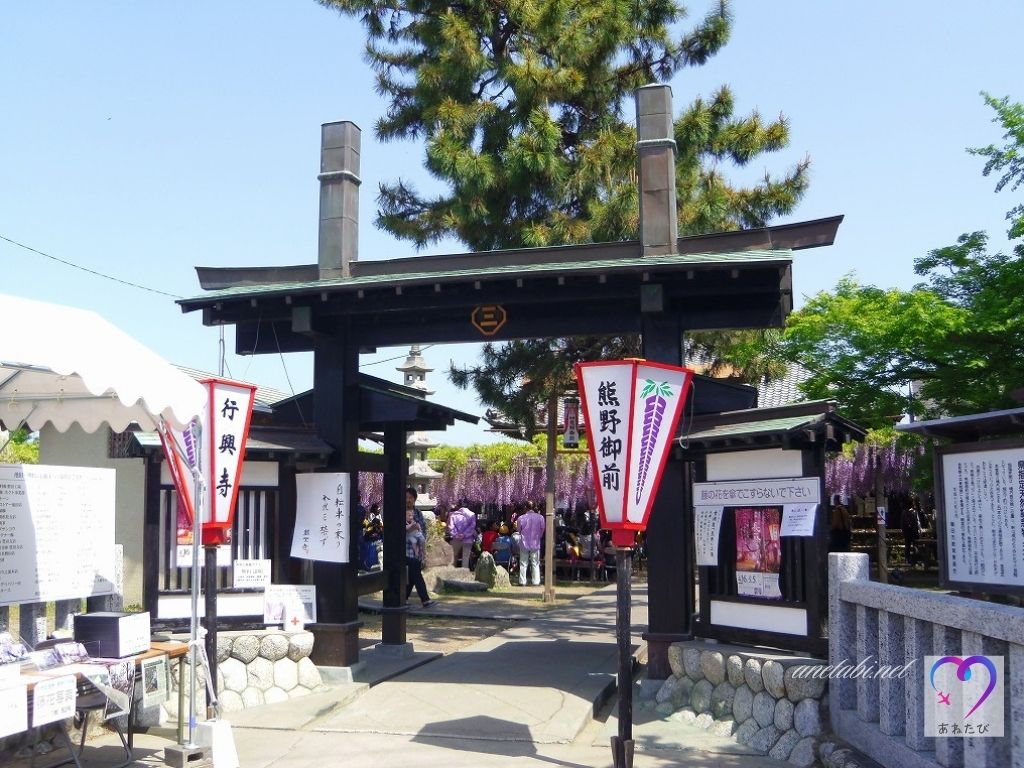
The “Yuya no Nagafuji(熊野の長藤)” (Long Wisteria of Yuya) blooming within the precincts of Gyoko-ji Temple(行興寺) is estimated to be approximately 850 years old (according to the Iwata City Board of Education). This wisteria is believed to have been personally planted by Yuya Gozen(熊野御前), a renowned beauty from the late Heian period. It has been designated as a National Natural Monument.
※Meaning of “Gozen” (御前)…”Gozen” (御前) is an honorific title historically used in Japan. It was appended to the names of nobles, high-ranking individuals, or their wives.
※The Heian period was a division of Japanese history that lasted from 794 to 1185 (or 1192).
She, hailing from Toyoda-cho, Iwata City, was noticed by Taira no Munemori(平宗盛), the third son of Taira no Kiyomori(平清盛). Deeply captivated by her, he invited her to the capital where she received his affection.
However, upon learning that her mother, whom she had left behind in her hometown, was ill in bed, she returned to this place and ended her life there.
Within the precincts of Gyoko-ji Temple(行興寺), there are graves of Yuya Gozen(熊野御前) and her mother.
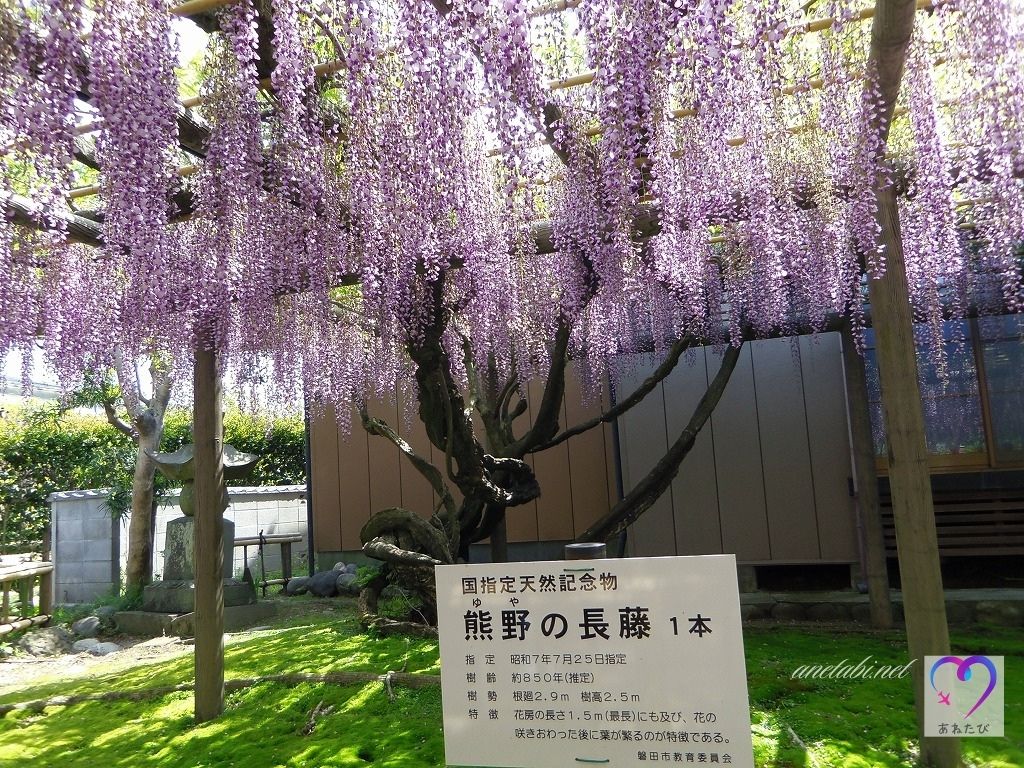
The temple grounds feature a total of six wisteria vines, including one designated as a National Natural Monument and five more designated by Shizuoka Prefecture.
These vines spread their tendrils across wisteria trellises set within the grounds, filling the surroundings with the sweet fragrance of their blossoms.
By the way,As you admire the wisteria blossoms, you’ll almost certainly spot carpenter bees (also called Kumanbachi) visiting to sip nectar.(These Japanese carpenter bees are also quite similar to the carpenter bees found in America)
Many people are surprised by their plump bodies and the loud buzzing sound of their wings . However, please be assured that carpenter bees are generally docile and will not sting unless they feel threatened.
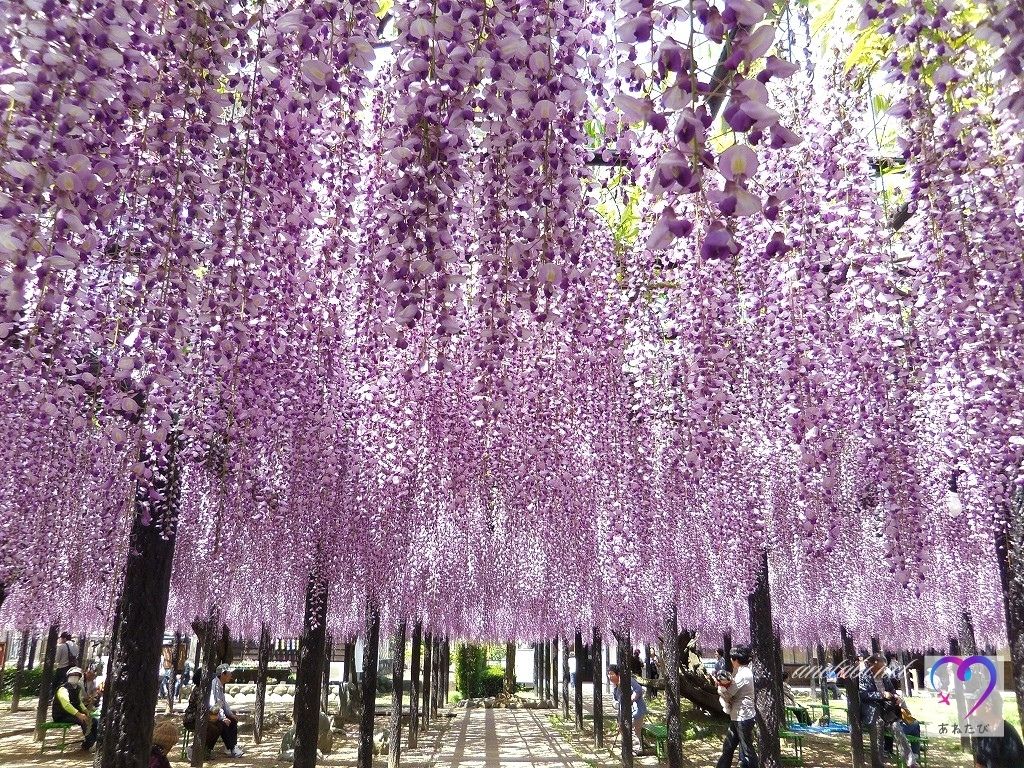
Toyoda Yuya Memorial Park(豊田熊野記念公園) is located just north of Gyoko-ji Temple.
This area was once home to Henjyouzan Saiho-ji(遍照山西法寺), a Shingon Buddhist temple founded in the Kamakura period . Today, in addition to beautiful wisteria trellises, the park also features a Noh stage at the Yuya Traditional Performing Arts Center .
Feel free to sit on the benches under the wisteria trellises and enjoy the flower viewing at your leisure, or simply relax and rejuvenate from your walk. Spend your time here however you wish.
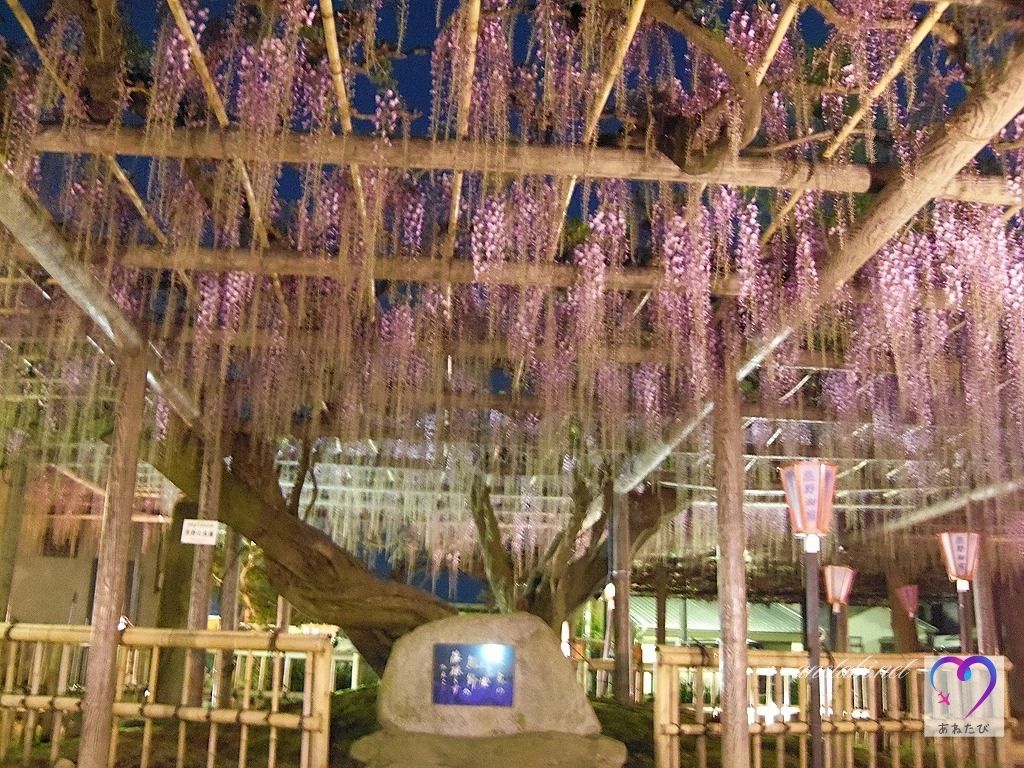
The Yuya’s Long Wisteria is illuminated nightly on weekends in late April and throughout the Golden Week holidays until approximately May 3rd.
(typically from the last weekend of April until around May 3rd, which usually falls during Japan’s Golden Week holidays.)
The illuminated takes place from sunset until 9:00 PM. As mentioned earlier, while the daytime may be warm, it can get quite chilly at night, so please dress warmly when you come to enjoy the evening display.
●Parking Information
During the daytime (from 9:00 AM to 5:00 PM), please use the temporary free parking lot located on the Tenryugawa riverbed. This temporary parking is approximately 300 meters from Gyoko-ji Temple.
After 5:00 PM, please use the Ikeda Community Center parking lot (Ikeda 407-1), which is also free of charge.
●Public Transport & Shuttle Bus Information
Furthermore, a free shuttle bus service operates from JR Toyodacho Station to the venue.
For more details, please refer to the “Notice on the Opening of Temporary Parking in 2025 (Reiwa 7)” issued by the Ikeda Community Development Council.
※Please note that the specific dates and details for parking and shuttle bus services for 2026 have not yet been announced. For the most up-to-date information, please refer to the official website of the Ikeda Community Development Council or the Iwata City Tourism Association.
Here is a map of the area around Gyokoji Temple (Yuya’s Nagafuji)▼. The temporary parking area along the Tenryu Riverbed is south of the “Restrooms” marked on the map. If traffic control staff are present, please follow their instructions.
Basic information (event information)
Hamamatsu Flower Park official website(external site)(※Japanese only)
Hamanako Garden Park official website(external site)
Official blog of the Ikeda City Planning Council (Gyokyoji Temple)(external site)(※Japanese only)
The three wisteria spots in and around Hamamatsu City each offer a distinct atmosphere .
Among these three, Hamamatsu Flower Park is arguably the most spectacular in terms of its sheer scale and the vast number of wisteria varieties it showcases.
Hamanako Garden Park presents a more serene and elegant ambiance, reminiscent of a watercolor painting with its Japanese-style garden setting.
And here at Gyoko-ji Temple, you can immerse yourself in the refined and classic world of the long wisteria, with its blossoms spreading richly overhead.
Discover Your Perfect Wisteria Experience!
Each wisteria spot in and around Hamamatsu offers its own unique charm, from the grand scale of Hamamatsu Flower Park to the serene beauty of Hamanako Garden Park, and the refined elegance of Gyoko-ji Temple’s long wisteria. We hope you’ll find your perfect match and enjoy an unforgettable time surrounded by their breathtaking beauty!
※Important Information
This information is current as of February 2026. For the latest updates, please check the official websites. Please note that unauthorized reproduction of this article and its use for AI learning are prohibited.(Noriko Asou)
About the Author▼
Noriko Asou, a writer based in Hamamatsu City, Shizuoka Prefecture.All images taken by me.
I have a deep love for seasonal flowers and traditional crafts, as well as all things beautiful and elegant. When I travel, I enjoy visiting shrines and temples, exploring Western-style architecture scattered across Japan, and collecting manhole cover designs.